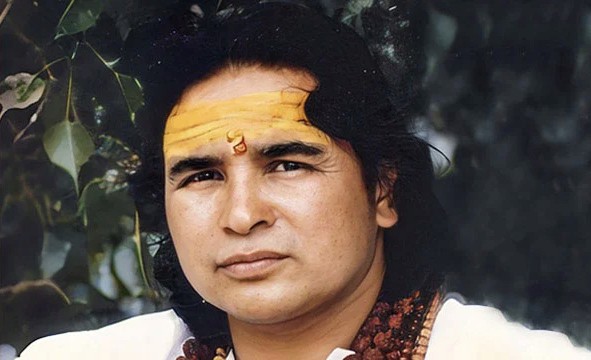
Om Namah Shivaya The Sacred Mantra of the Haidakhan Babaji Tradition
Om Namah Shivaya is one of the most ancient and powerful mantras in the yogic tradition of India. It is widely known as the mantra of Lord Shiva, representing the divine consciousness present within all beings.
In the teachings of Shri Haidakhan Babaji, this mantra holds a central place. Babaji encouraged devotees to repeat the divine name constantly, reminding them that spiritual practice does not require complicated rituals but sincere remembrance of God.
At Pohoiki Ashram, the mantra Om Namah Shivaya is chanted daily during aarti, meditation, and while performing service to the land.

What Does Om Namah Shivaya Mean?
The mantra is composed of five sacred syllables, often called the Panchakshari Mantra.
Om – the universal sound of creation
Namah – I bow or offer reverence
Shivaya – to Shiva, the divine consciousness
Together, the mantra is often translated as:
“I bow to the divine within.”
Rather than worshipping an external deity alone, the mantra reminds practitioners that the same divine presence exists within all beings.
The Mantra in Babaji’s Teachings
Haidakhan Babaji taught that repeating the divine name is one of the simplest and most powerful spiritual practices.
Babaji emphasized three guiding principles:
Truth
Simplicity
Love
Within this teaching, the repetition of Om Namah Shivaya becomes a way to keep the mind centered in divine awareness while living an active life of service.
Babaji encouraged devotees to repeat the mantra:
• during prayer
• while working
• while walking
• silently throughout the day
In this way, spiritual practice becomes part of everyday life.
The Mantra: Om Namah Shivaya
Babaji encouraged the repetition of the ancient Sanskrit mantra: Om Namah Shivaya ॐ नमः शिवाय
This mantra is traditionally translated as: “I bow to the divine within.” Babaji taught that repeating the divine name helps quiet the mind and keeps the heart centered in spiritual awareness. Devotees are encouraged to repeat the mantra during prayer, meditation, and even while performing daily work.
Chanting Om Namah Shivaya
The mantra may be practiced in several ways:
• Silent repetition (Japa)
• Repeating the mantra quietly in the mind during meditation.
• Chanting aloud
• Singing or chanting the mantra with others in a devotional setting.
• Repetition during work
Babaji encouraged devotees to remember the divine name even while performing daily tasks. This approach reflects Babaji’s teaching that “Work is Worship.”
Om Namah Shivaya and Aarti
In the Haidakhandi tradition, Om Namah Shivaya is often chanted during or after aarti, the devotional ceremony performed at sunrise and sunset.
The chanting of the mantra deepens the atmosphere of devotion and brings the mind into a state of quiet remembrance.
At Pohoiki Ashram, the mantra is repeated daily as part of the rhythm of prayer and service.
The Five Elements
Another interpretation of Om Namah Shivaya connects the five syllables of the mantra to the five elements of nature:
Na – Earth
Ma – Water
Shi – Fire
Va – Air
Ya – Space
Through chanting the mantra, practitioners symbolically harmonize the elements within themselves and the world around them.
Om Namah Shivaya at Pohoiki Ashram
At Pohoiki Ashram on the Big Island of Hawaiʻi, the mantra Om Namah Shivaya is woven into the daily life of the community.
It is chanted during:
• morning aarti
• evening aarti
• meditation
• work on the land
In the tradition of Haidakhan Babaji, remembering the divine name is considered one of the most direct paths to spiritual realization.
Experience the Practice
Visitors to Pohoiki Ashram are welcome to join morning or evening aarti and experience the chanting of Om Namah Shivaya within the rhythm of the ashram community.